
Convectors for Panoramic Windows: Beat Cold and Condensation
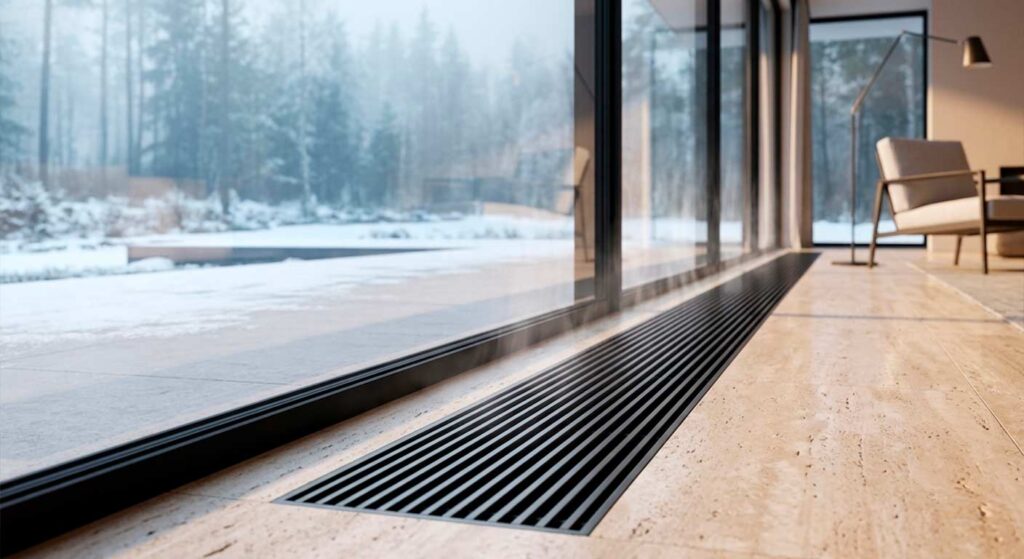
Panoramic windows and glazing bring light and space, but they are also a source of heat loss and condensation. A convector for panoramic windows solves both problems by creating a thermal curtain along the glass. Here’s how it works and which model to choose.
Why it’s cold and the glass fogs up near panoramic windows
A large glass area quickly loses heat outdoors. A zone of cold air forms near the floor, and condensation appears on the glass due to the temperature difference. Ordinary radiators can’t be placed under a panoramic window — they would block the view.
How a trench convector creates a thermal curtain
A trench (in-floor) convector is mounted flush with the floor right under the window. Warm air rises along the glass and cuts off cold and condensation without spoiling the panoramic view.
Which convector to choose
- Natural convection — Heatmann Line: silent, for standard glazing;
- Forced convection — Line Fan: a fan delivers more output for large panoramas;
- With fresh air — Line Air: heating plus supply ventilation.
For wet areas and pools
If the panoramic windows face a pool, winter garden or spa, choose moisture-resistant Line Pool models — they are designed for high humidity.
Benefits of the solution
- no condensation on the glass;
- comfortable temperature near the windows;
- concealed installation — nothing spoils the interior;
- heat pump compatibility.
Frequently asked questions
Does a convector remove condensation on panoramic windows?
Yes. The upward flow of warm air along the glass prevents moisture from condensing.
Which convector is more powerful for large glazing?
Fan models (Line Fan) deliver more heat for the same recess size than natural convection.
Is the convector visible in the floor?
Only a decorative grille flush with the floor remains on the surface — it is almost invisible.